PAEDIATRIC NEUROLOGY · 2026-09-12 · en
Paediatric neurology and developmental education: one shared pathway
Connecting medical questions, developing skills and family goals while preserving each professional’s responsibility.
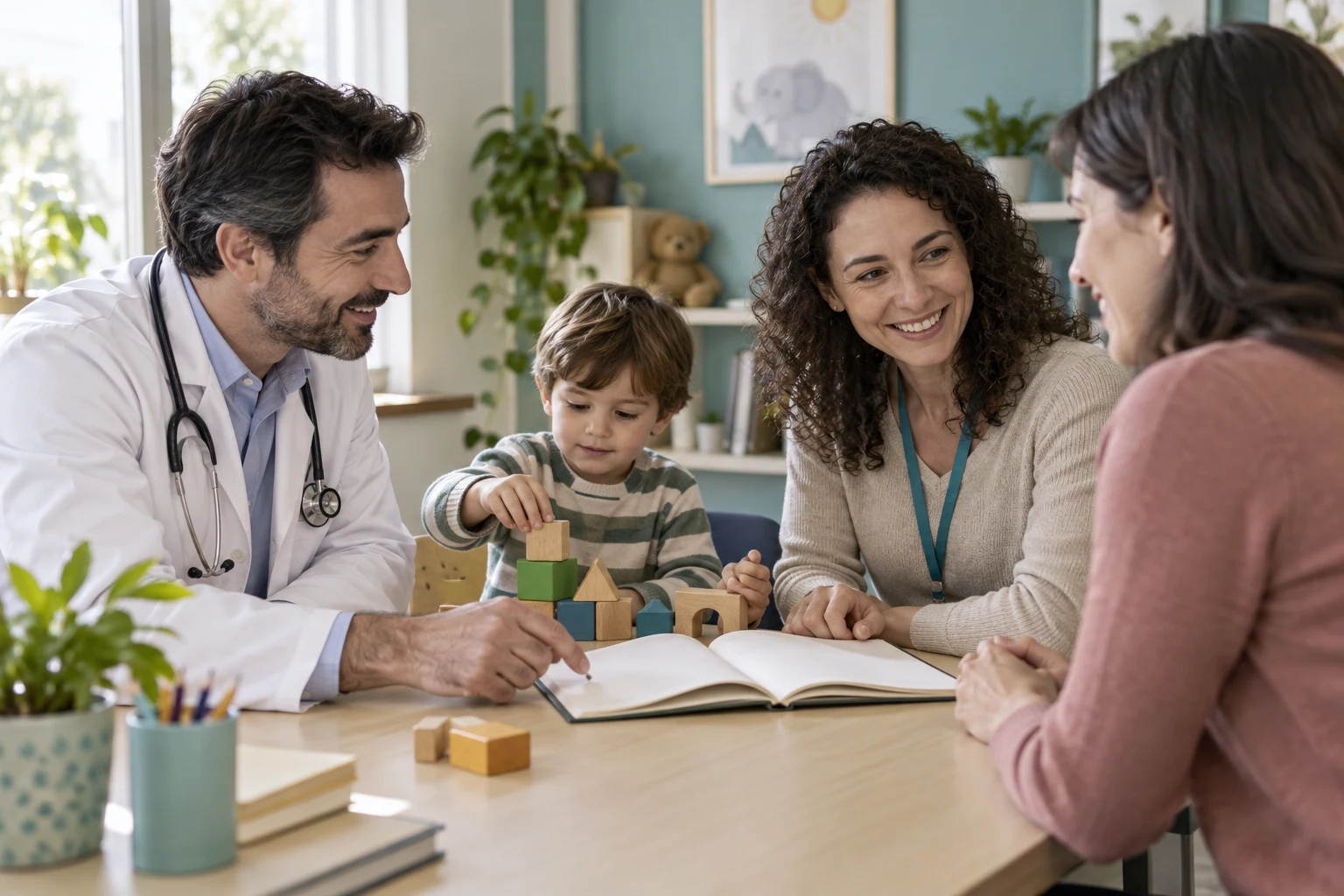
AI 生成的编辑插图 · 人物与场景均为虚构
A child may see several professionals while the family retells the same history at every appointment. A shared record should connect consultations: which question was raised, what has been assessed and what the next team member needs to know.
Multidisciplinary working has specific clinical applications. For example, guidance on cerebral palsy describes team-based care and specialist communication assessment. This illustrates a way of organising support; it does not justify applying the same pathway to every developmental concern.
A neurological conclusion and an educational account answer different questions. One records a medical assessment; the other may describe task performance and required support in detail. A digital system should connect them without substituting either for the other.
In the proposed pathway, families help formulate understandable goals: expressing a request, joining a game or completing part of an everyday activity. Each goal connects to observations and a responsible professional, clarifying what the next meeting will review.
AI’s research role here is continuity: identifying unanswered questions, preparing a change summary and showing the origin of information. Contradictions between records should remain visible until reviewed; automatic reconciliation can conceal a meaningful difference.
A useful outcome is an understandable sequence of actions rather than one overall developmental score. Visualisation can show completed assessments, open questions and changes in individual skills. Medical decisions and educational support remain within the responsibilities of the relevant professionals.